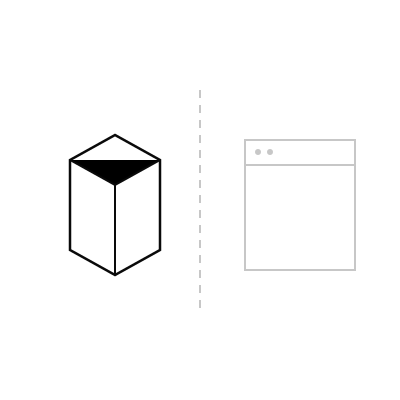
The founders who ask us this question usually have a fixed amount left after the product itself is sorted, and a choice between a packaging refresh and a proper website. The honest answer depends on where the sale is actually lost, not which project feels more exciting to brief.
Follow the money, not the mood board
If most revenue comes through a marketplace, a retailer's shelf, or a wholesale account, packaging is doing the selling in a context your website barely touches. A customer picks the product up, the box or label has one second to earn the next three, and no amount of homepage polish changes that moment. Spend there first.
This sounds obvious written down, and it is routinely ignored anyway, because a founder who has been staring at the same box for two years is bored of it in a way no customer actually is. Boredom with your own packaging is not evidence it is losing sales. Only the channel data is.
If most revenue already comes from people finding the brand online, through search, social, or word of mouth, a weak site is leaking people who were already convinced enough to click through. No amount of packaging improves a product page that loads slowly or hides the price. See where a small site should actually spend for the template-by-template version of this argument.
The case for packaging first
- Physical retail or wholesale is the main channel. The box is the pitch. A website redesign does not move units sitting on a shelf.
- The product photographs badly in its current packaging. Every other marketing channel, including the website, inherits that weak photography until packaging changes.
- Unit economics support a refresh without a full relaunch. Label and box changes can often ship in weeks, with less risk than a full rebuild.
The case for the website first
- Direct-to-consumer is already the main or intended channel. A slow, unclear product page costs sales every day it stays live, quietly, with no dramatic failure to point to.
- The current site cannot take the traffic a packaging refresh would send it. A beautiful new box photographed for social media, linking to a site that does not convert, spends the packaging budget twice.
- Checkout, not shelf appeal, is where customers currently drop off. Pull the analytics before the brief. If people arrive and leave at the cart, no box fixes that.
A five-minute way to check before briefing either
Pull up analytics or sales records and answer one question: in the last quarter, where did the last twenty customers actually come from. Shelf, marketplace, search, a friend's recommendation, a social post. Whichever channel produced most of them is the one whose touchpoint, packaging for physical channels, the site for digital ones, deserves the budget first. It is a five-minute exercise and it settles an argument that otherwise gets decided by whoever is more persuasive in the planning meeting.
The order that works
When a brand genuinely needs both and the budget cannot cover both well, we sequence packaging first for retail-first brands and the product template first for direct-to-consumer ones, then the second project three to six months later once the first is earning. Doing both at once, half-budgeted, is how a brand ends up with a beautiful box and a site that cannot sell it, or the reverse.